Showing posts with label Unit 2 - Research Techniques. Show all posts

Tuesday, 1 October 2019

Elements of cinematography

Elements Of Cinematography 

 Composition 
In cinematography, composition refers to the frame of the image and how the elements of the mis-en-scene appear in it. Composition guidelines must be observed when telling stories visually, as in filmmaking. Useful conventions are applied to make heroes stronger, villain ominous, generate anxiety, give the audience tranquility, and more…

Film Scholar's Insight

Composition rules and conventions are older than cinema and photography. Most of the concepts in this page have been used for thousands of years in painting. Filmmakers and photographers have borrowed many techniques from painters and used them as a springboard for new ideas and practices.

Lead Room

If a character is looking frame left, then he should be placed frame right. This makes the framing comfortable because the subject is looking at the open space in front of him. This open space is called lead room or lead space.
If the actors were frame left, looking frame left, then the empty space would be behind them. This doesn't feel right because they would be looking at the edge of the frame. The proximity to the frame would generate a claustrophobic undertone that could upset some viewers.
Notice that when two shots of two actors in different sides of the screen are intercut together, the audience surmises that the actors are looking to one another, regardless of where they are.


Rule of Thirds

Another basic composition principle is called Rule of Thirds. To follow it, one must imagine the frame with two vertical lines and two horizontal lines, as to create three vertical sections of the same dimensions and three vertical sections also of the same size. The result is something like this:
The intersections of the lines are points of interest, where important objects are often placed. These points of interest are comfortable to the eye, thus the middle portion of the frame are kept "empty" or clear.

Filmmaker's Insight

Filmmakers, like any other group of artists, like to break rules. The guidelines explained in this pages are just some basic concepts that any cinematographer or camera operator should know and apply. In some circumstances, however, it's okay to stray away from these rules.
Overlooking the norm is acceptable with motivation and purpose. With practice, you should be able to conceptualise extraordinary compositions and make them work in your favor. Consider, for example, the two types of composition below.

Static Composition

Compositions with the majority of lines being horizontal or vertical are called Static Composition. In theory, horizontal and vertical lines are somewhat soothing, calm, tranquil...
Notice how the the Emperor in Hero (2002) is not in none of the intersections of the Rule of Thirds. Indeed, he is right in the middle of the frame. The symmetry of the shot communicates the perfection of the palace and intensifies the situation. It is as though only a sacred or regal place could be so symmetrically perfect.

Dynamic Composition

When a composition has many diagonal lines it is called Dynamic Composition. The dynamism or excitement comes from the fact the diagonals are somewhat unsettling (as opposed to a static compositions that communicate peace and tranquility).
As shown in the example above, one easy way to make shots dynamic is with an ultra high camera angle looking down at the subject. Depending on how camera is positioned, the natural lines of the environment will look diagonal

Enrolment Task - Editing

Task:
Research the development of editing technology

Create a blog post that outlines the development of editing technology.
This post must include mention of:

• Early editing - cutting
• Moviola
• Flatbed Edit Suites
• Linear and Non-Linear editing
• Online and Offline Editing
• The Digital Era (CMX-600, Edit Droid and Avid 1)
• Modern editing platforms (Final Cut, Premiere Pro)
• Film and file types

Include mention of key texts affected by the developments in technology. You must
include videos and images that help illustrate your answers

Cutting
Cutting, the most basic edit in film, is a visual transition where one shot is instantaneously replaced by another on screen. In early films, film makers were cautious of editing as they thought it would cause confusion within audiences, however upon trial and error they found by cutting/splicing scenes, they could form more complex narratives. 

Moviola
moviolaA moviola is a device that allows a film editor to view a film whilst editing. It was the first machine for motion picture editing when it was invented by Iwan Serrurier in 1924. The machine allowed editors to study individual frames in their cutting room to help them determine where the best cut could take place.

Flatbed edit suites
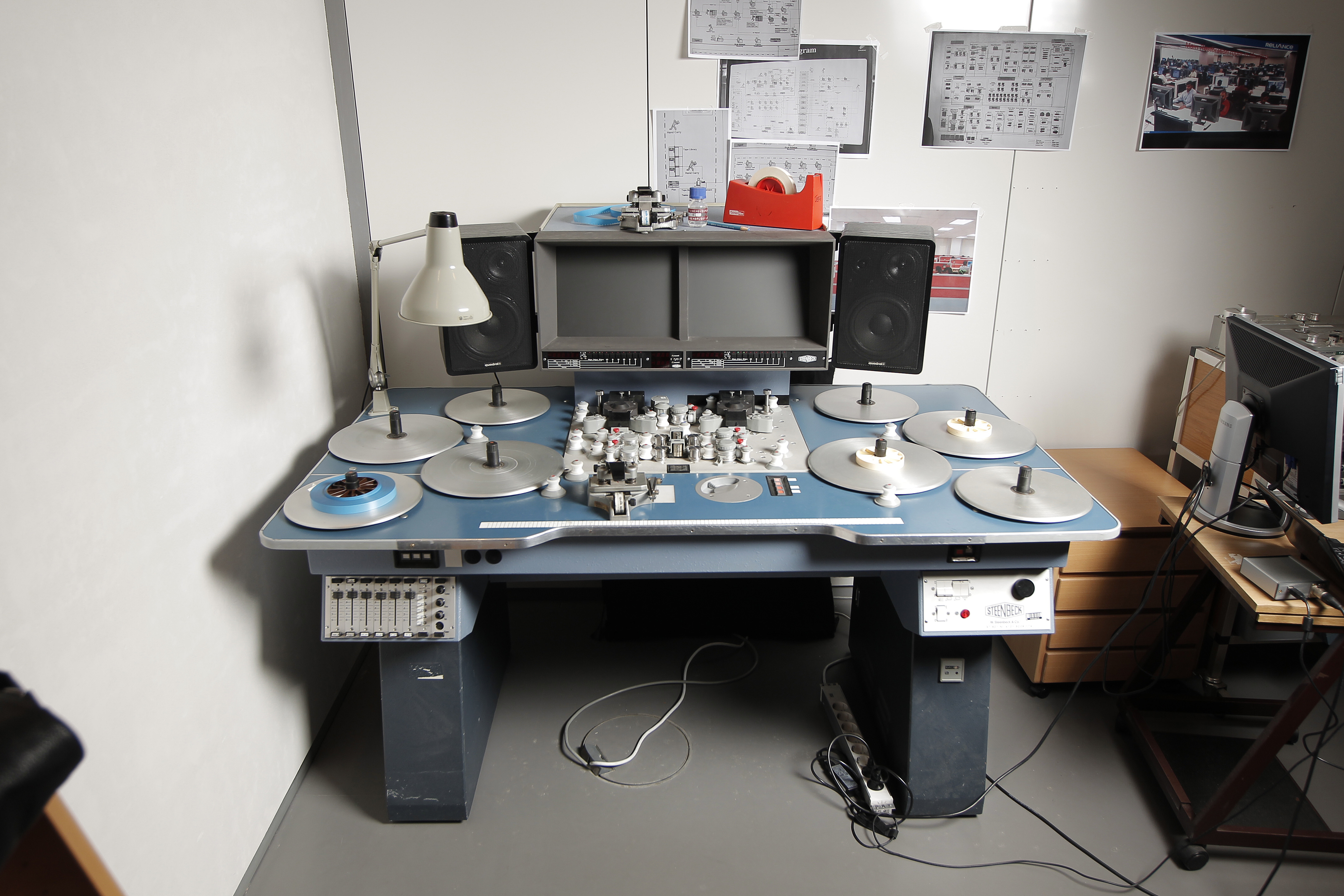
A flatbed edit suite was what followed after moviola, it's another film editor used with motion picture. The images and sound rolls are loaded onto separate plates which move individually or can be locked together to maintain a synchronised transition between the sound and the image. 


Image result for flat bed edit suite

Linear and Non-linear editing 
Linear editing is a post-production process of selecting, arranging and altering images and sound in a predetermined sequence(tape-to-tape) it was the first format to edit video tapes to begin with and was used a lot in live TV.
Non-Linear Editing became available and gave a new way of editing in the 90's, it allowed the original content to be kept with the edits themselves are edited by the software within, each time the audio audio or visual is rendered it is copied from the original therefore keeping the original safe.

Online and Offline Editing 
Offline is very similar to non linear editing in that it doesn't alter the original, it is copied and then edited. The digital revolution has made the process quicker for the editor when they moved from tape video cutting to computer editing software. Online editing is the next step, online editors allow an editor to edit video tape recordings using computer software.


The Digital Era
CMX 600
The first Non-Linear editing system, it was introduced in 1971 by CMX Systems, a joint company of CBS and Memorex, it was referred to as RAVE, or Random Access Video Editor. The 600 had a console with two black and white monitors, as well as a light pen which was used to control the system. The right monitor played the preview video, and was used by the editor to make cuts and to edit decisions by using the light pen to select options, which were over-laid on the image, while the left screen played the edited video. It recorded and played back video in analogue on disk packs the size of washing machines.

Edit Droid                                                      The Edit Droid is a computerised analogue NLE system which was developed by Lucasfilm spin-off company, the Droid Works and Convergence Corporation who formed a joint company. It existed through the mid 80’s to the early 90’s. Edit Droid debuted at the National Association of Broadcasters 62nd Annual meeting in 1984, alongside the Montage Picture Processor which would be its competitor for many years. Edit Droid has three screens, one Sun-1 computer display, one small preview video monitor and a large rear-projected monitor containing the cut. It pioneered the use of graphical display for editing introducing the timeline as well as picture icons to identify raw video clips.

Avid 1                                                            Avid 1 was based on an Apple Macintosh II computer with special hardware and software designed by Avid installed. By the early 1990s, Avid/1 began replacing machines like the Moviola and Steenbeck flatbed editors, allowing editors to edit easier. The first feature film edited using Avid/1 was Let’s Kill All The Lawyers (1992) directed by Ron Senkowski. By 1994, only three feature films had been edited using Avid/1, by 1995, dozens had made the switch, showing its popularity.

Modern Editing Software
Premier Pro 
A timeline based video editing software app, used by BBC and CNN for feature films such as Gone Girl, Captain Abu Raed, and Monsters. Premier Pro’s Plug-ins allows for importing and exporting formats not supported by QuickTime and others, and supports a wide variety of video and audio files.

Final Cut Pro                                                      A series of non-linear video editing software developed by Macromedia Inc. and later by Apple, the most recent version runs on Mac OS computers. The software allows the editor to transfer video onto a hard drive to be edited, processed and rendered to a variety of formats.

https://emilywheelhousehnccreativemedia.wordpress.com/2016/08/31/development-of-editing-technology/


moviola image
https://rowlandediting.wordpress.com/history-of-video-editing-and-techniques/
flatbed edit suite image
https://en.wikipedia.org/wiki/Steenbeck

Tuesday, 24 September 2019

Camera Research (shutter speed etc)

Shutter Speed 
Controls how long your camera's sensor is exposed to the light and is responsible for the motion appearance within photos. "An easy way to understand shutter speed is to liken it to your eyelids. For example, if you shut your eyes, then open them for 1/2 second without blinking, then shut them again, you've essentially created a 1/2 second exposure for your eyes. That is, for that 1/2 second, light was able to pass through to your retinas." 
Shutter speed is most commonly measured in fractions of a second, like 1/200 seconds or 1/1000 seconds. Some high-end cameras offer shutter speeds as fast as 1/8000 seconds.   
For motion in an image, the required shutter speed would need to be faster than the motion occurring. Also important is the direction of the camera in relation to the motion as that can alter the required shutter speed.                     
                                   ISO
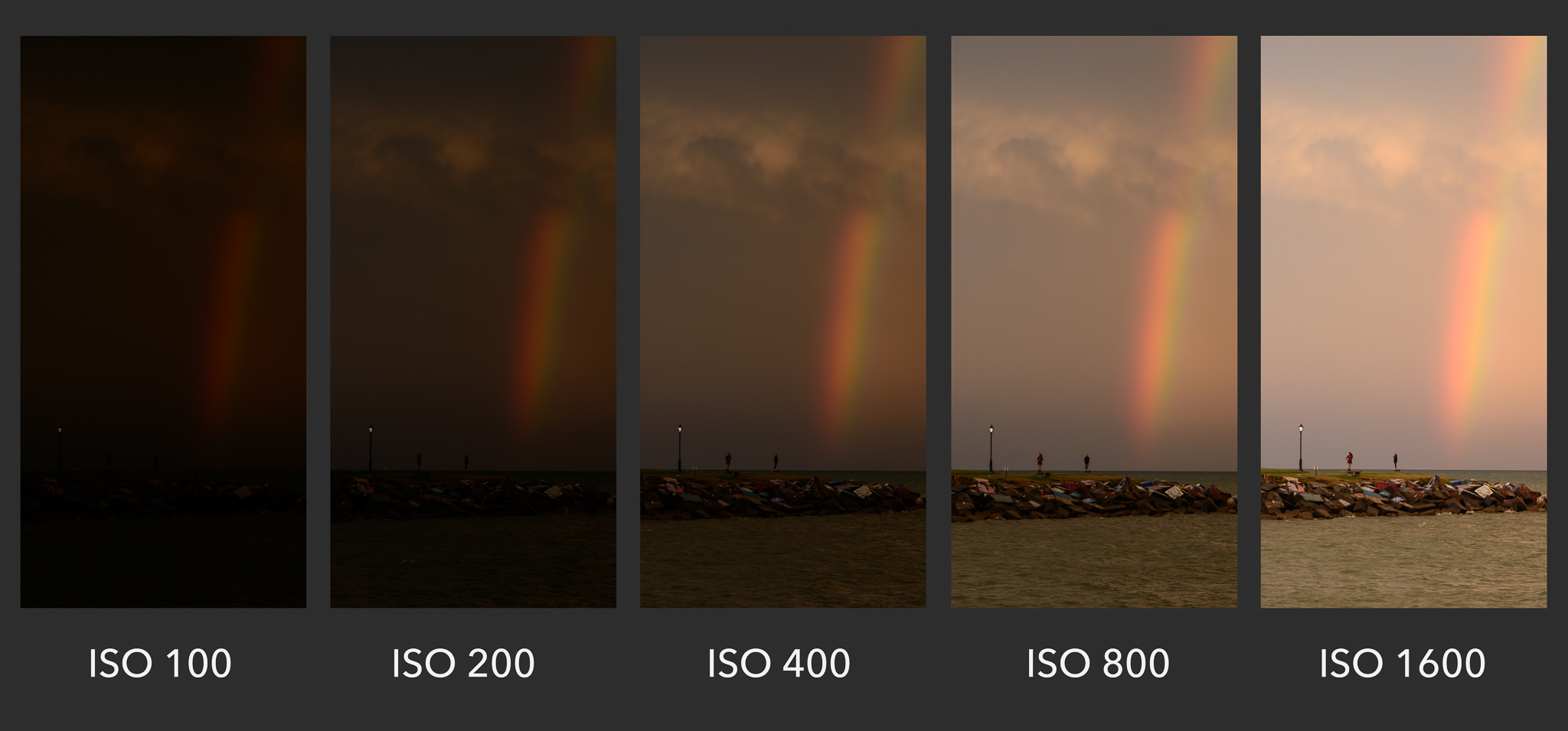
Determines how sensitive your camera is to light whilst also being responsible for how much digital noise appears in an image,(more simply a setting that will brighten or darken a photo). ISO increased helps capture shots in darker environments but can also lead to a high concentration of 'noise'. 
A common ISO set: 
ISO 100 (low)                    
ISO 200
Aperture Effect on BrightnessISO 400
ISO 800
ISO 1600
ISO 3200
ISO 6400 (high)

Aperture 
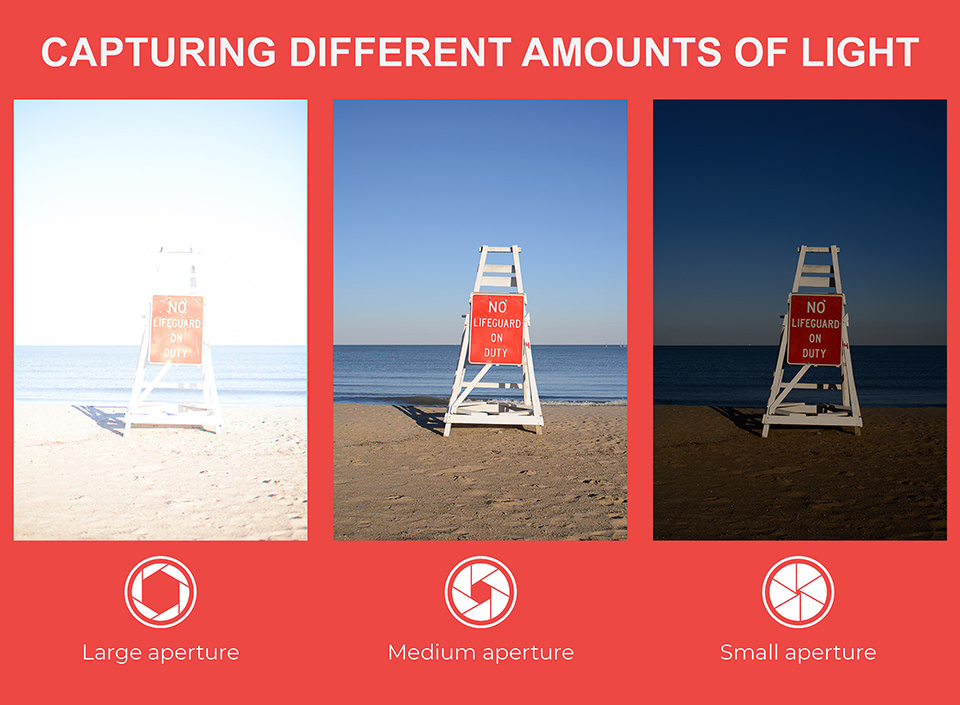
Controls the amount of light entering a lens and is responsible for depth of field or the extent of the image that's in sharp focus. Again the comparison of the human eye is the simplest explanation, like the pupil of a human eye, the lens can expand or shrink depending on the exposure to light. 

Depth of field:
Depth of field is the amount of your photograph that appears sharp from front to back. Images can vary between having shallow depth of field (out of focus background) or deep depth of field (sharp foreground and background). Categorised further as large and small
depth of field often plays a key part in a image where you want your subject isolated or where you want every bit of detail captured respectively.
Depth of field comparison between an image captured at f/4 vs f/32 apertures

Frame Rate
The number of individual frames that comprise each second of a video also known as FPS (frames per second). Frame rate can impact the style and viewing of a video, differing frame rates result in different viewing experiences. It controls how realistic your video appears (if you choose a frame rate too high, it will appear unnatural and will be hindered by the description of the "soap opera effect" a frame rate too low will appear "choppy" and provide a poor experience) or whether you use additional techniques in editing.
For example, movies are usually displayed at 24fps, since this frame rate is similar to how we see the world, and creates a very cinematic look. Video that’s broadcast live or video with a lot of motion, such as a sporting event or video game recording, will often have a higher frame rate, as there’s a lot happening at once and a higher frame rate keeps the motion smooth and the details crisp.                                                 
24fps
This is the standard for movies and TV shows, and it was determined to be the minimum speed needed to capture video while still maintaining realistic motion. Even if a film is shot at a higher frame rate, it’s often produced and displayed at 24fps. Most feature films and TV shows are shot and viewed at 24 fps.
30fps
This has been the standard for television since the early days, and is still widely used despite producers moving toward a more cinematic 24fps. Videos with a lot of motion, such as sports, will often benefit from the extra frames per second. The reasons for using 30fps is strangely complicated and it mainly has to do with television and electricity standards set a long time ago. If you want learn more, check out this article on frame rate and jump down to the section titled “modern video standards.”
60fps                                                                            Anything over 30fps is typically used for slow motion purposes or the recoding of game footage.


Pull Focus 

Pull focus is a camera technique in which you can change the focus of a camera during a shot, this usually involves shifting the focus from one subject to another. 

The focus pull is useful for directing the viewer's attention. For example, if there are two people in shot but only one is in focus, that person is the subject of attention. If the focus changes to the other person, they become the subject. This is often used in drama dialogues — the focus shifts backwards and forwards between the people speaking. A slightly more subtle trick is to focus on a person speaking then pull focus to another person's silent reaction.

https://www.photographytalk.com/beginner-photography-tips/shutter-speed-explained  

https://photographylife.com/what-is-iso-in-photography

https://photographylife.com/what-is-aperture-in-photography

https://www.techsmith.com/blog/frame-rate-beginners-guide/

https://www.mediacollege.com/video/camera/focus/pull.html

New wave essay